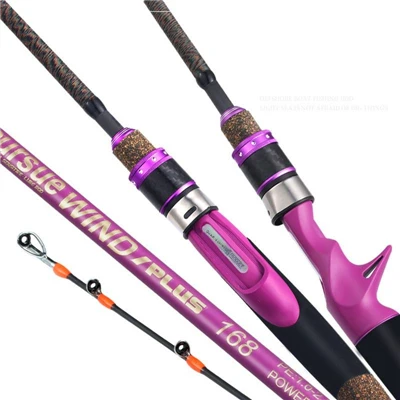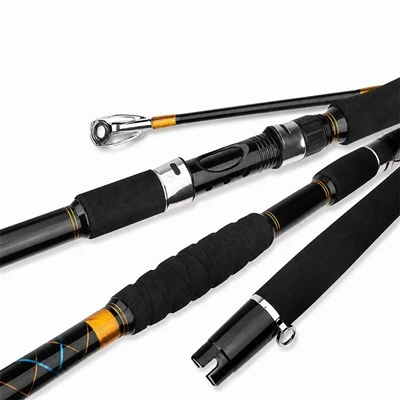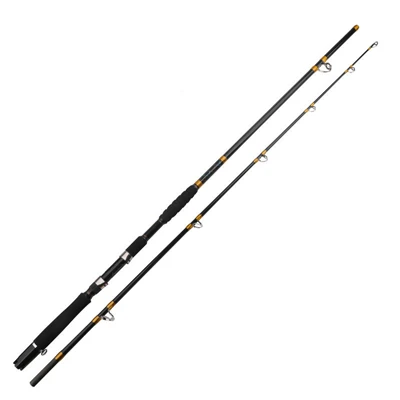
Slow Pitch Jigging Rod Manufacturer for Offshore Programs
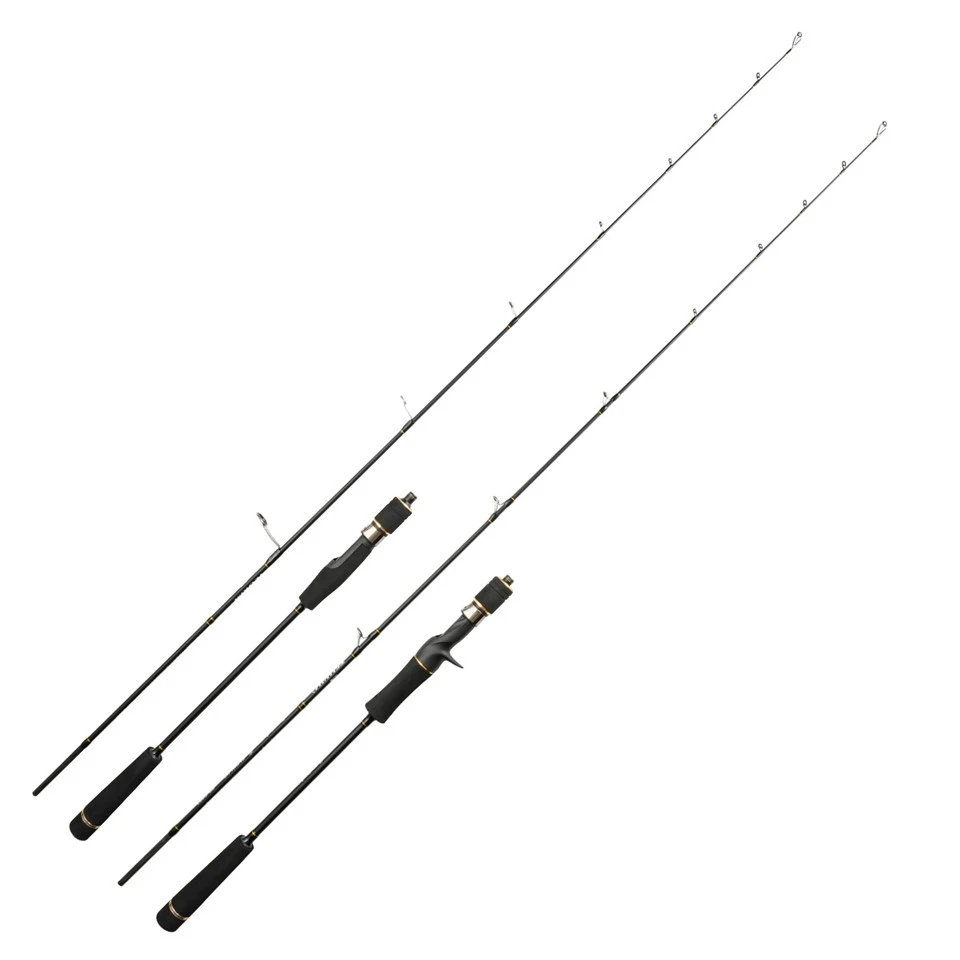
This series is developed for fishing brands, importers, and wholesalers building dedicated slow-pitch and offshore jigging rod ranges.
Rather than using one general-purpose blank across every application, the series is divided by jig class, PE rating, rod length, and reel configuration. Buyers can select lighter PE #0.8–2 models for 150 g jig applications or heavier PE #2–4 models for 300 g setups, then choose between spinning and casting layouts according to the target market.
Product Specifications
|
Model |
Type |
Length |
Rod Weight |
Max Jig Weight |
PE Rating |
Tip Dia. |
Butt Dia. |
Closed Length |
Guides |
|
TP-S602 (0.8–2) |
Spinning |
6’0″ / 1.83 m |
160 g / 5.64 oz |
150 g / 5.29 oz |
#0.8–2 |
1.3 mm |
7.1 mm |
132 cm / 52.0 in |
8 |
|
TP-S602 (2–4) |
Spinning |
6’0″ / 1.83 m |
162 g / 5.71 oz |
300 g / 10.58 oz |
#2–4 |
1.7 mm |
7.1 mm |
132 cm / 52.0 in |
8 |
|
TP-S662 (0.8–2) |
Spinning |
6’6″ / 1.98 m |
167 g / 5.89 oz |
150 g / 5.29 oz |
#0.8–2 |
1.3 mm |
7.1 mm |
150 cm / 59.1 in |
8 |
|
TP-S662 (2–4) |
Spinning |
6’6″ / 1.98 m |
173 g / 6.10 oz |
300 g / 10.58 oz |
#2–4 |
1.7 mm |
7.1 mm |
150 cm / 59.1 in |
8 |
|
TP-C602 (0.8–2) |
Casting |
6’0″ / 1.83 m |
172 g / 6.07 oz |
150 g / 5.29 oz |
#0.8–2 |
1.3 mm |
7.1 mm |
132 cm / 52.0 in |
8 |
|
TP-C602 (2–4) |
Casting |
6’0″ / 1.83 m |
176 g / 6.21 oz |
300 g / 10.58 oz |
#2–4 |
1.7 mm |
7.1 mm |
132 cm / 52.0 in |
8 |
|
TP-C662 (0.8–2) |
Casting |
6’6″ / 1.98 m |
177 g / 6.24 oz |
150 g / 5.29 oz |
#0.8–2 |
1.3 mm |
7.1 mm |
150 cm / 59.1 in |
9 |
|
TP-C662 (2–4) |
Casting |
6’6″ / 1.98 m |
183 g / 6.46 oz |
300 g / 10.58 oz |
#2–4 |
1.7 mm |
7.1 mm |
150 cm / 59.1 in |
9 |
|
Construction |
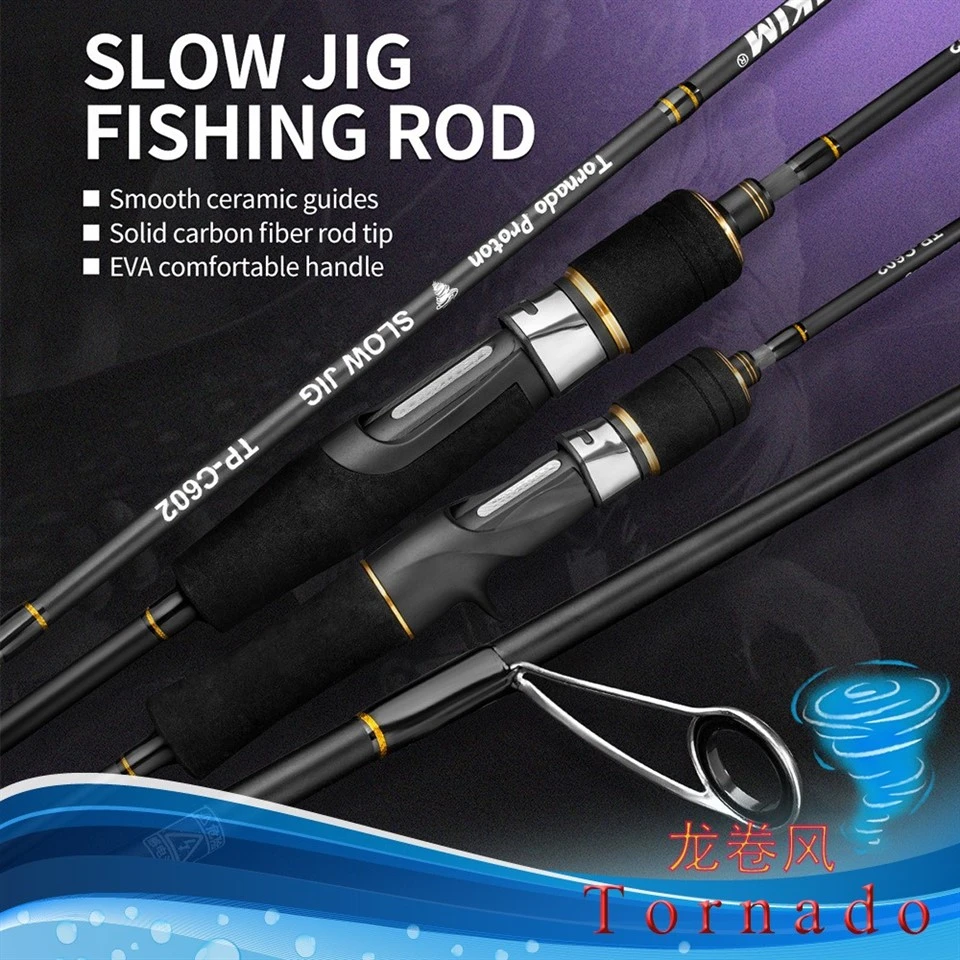
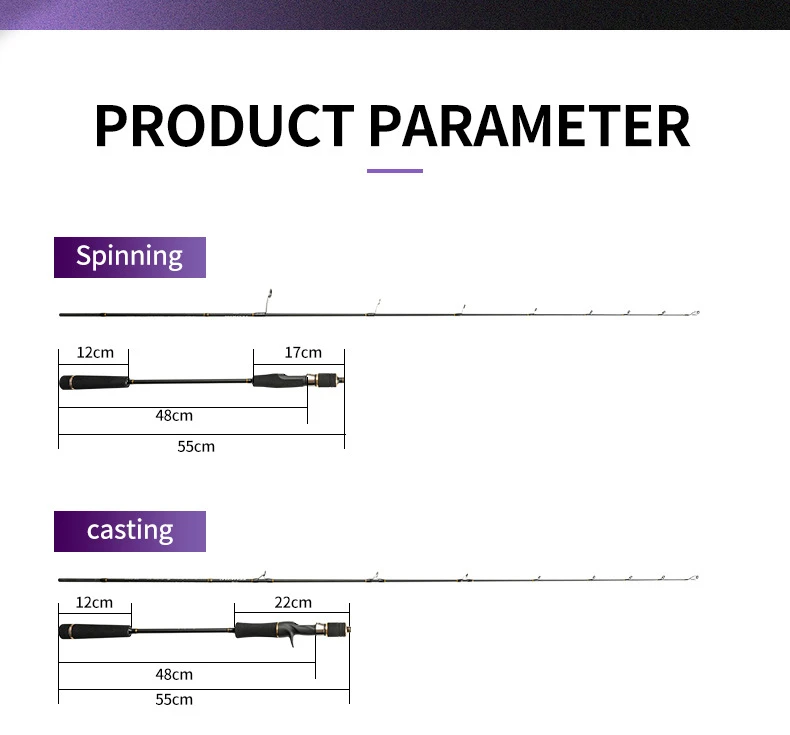
1.5-piece detachable handle |
|
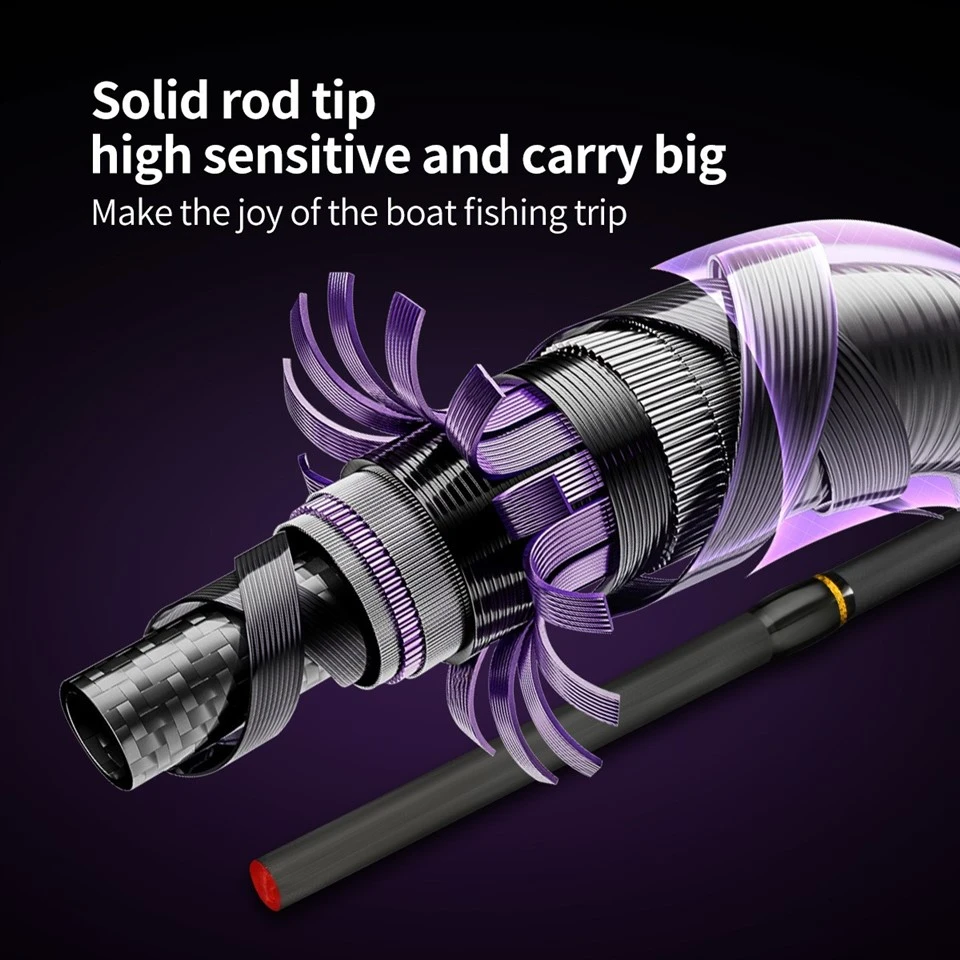
Tip |
Solid carbon fiber |
|
Guides |
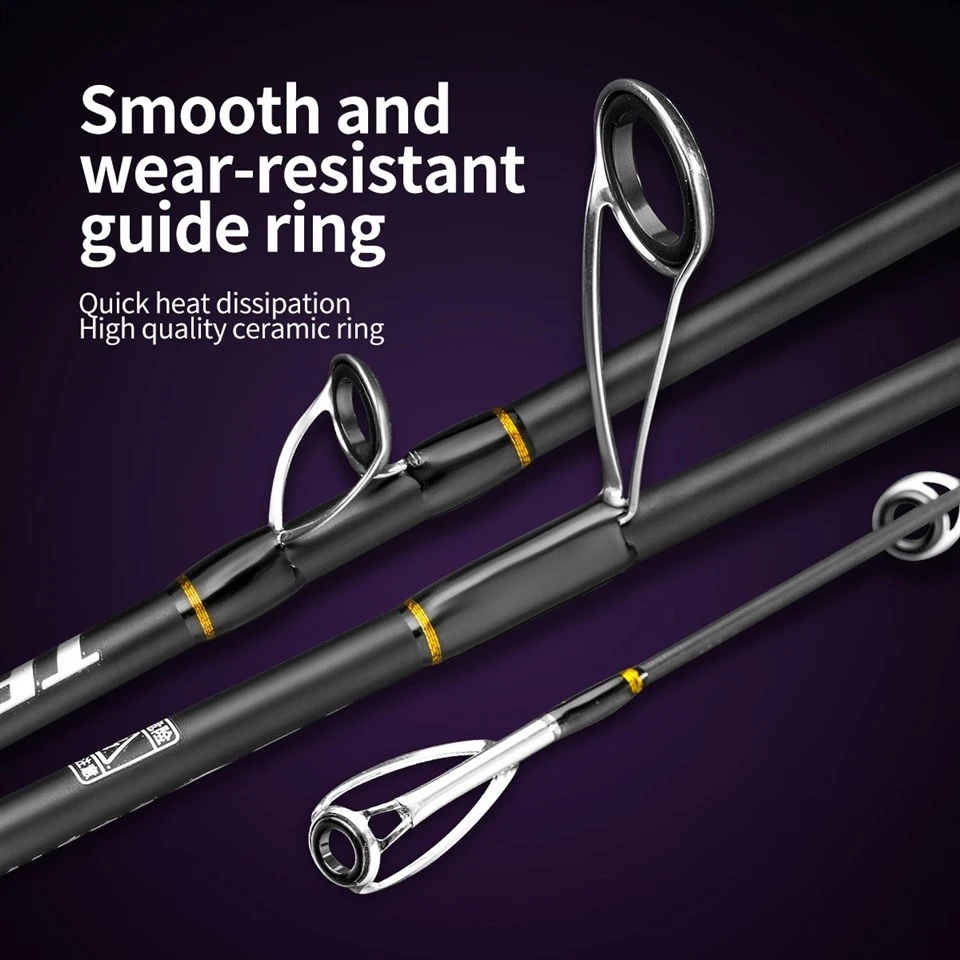
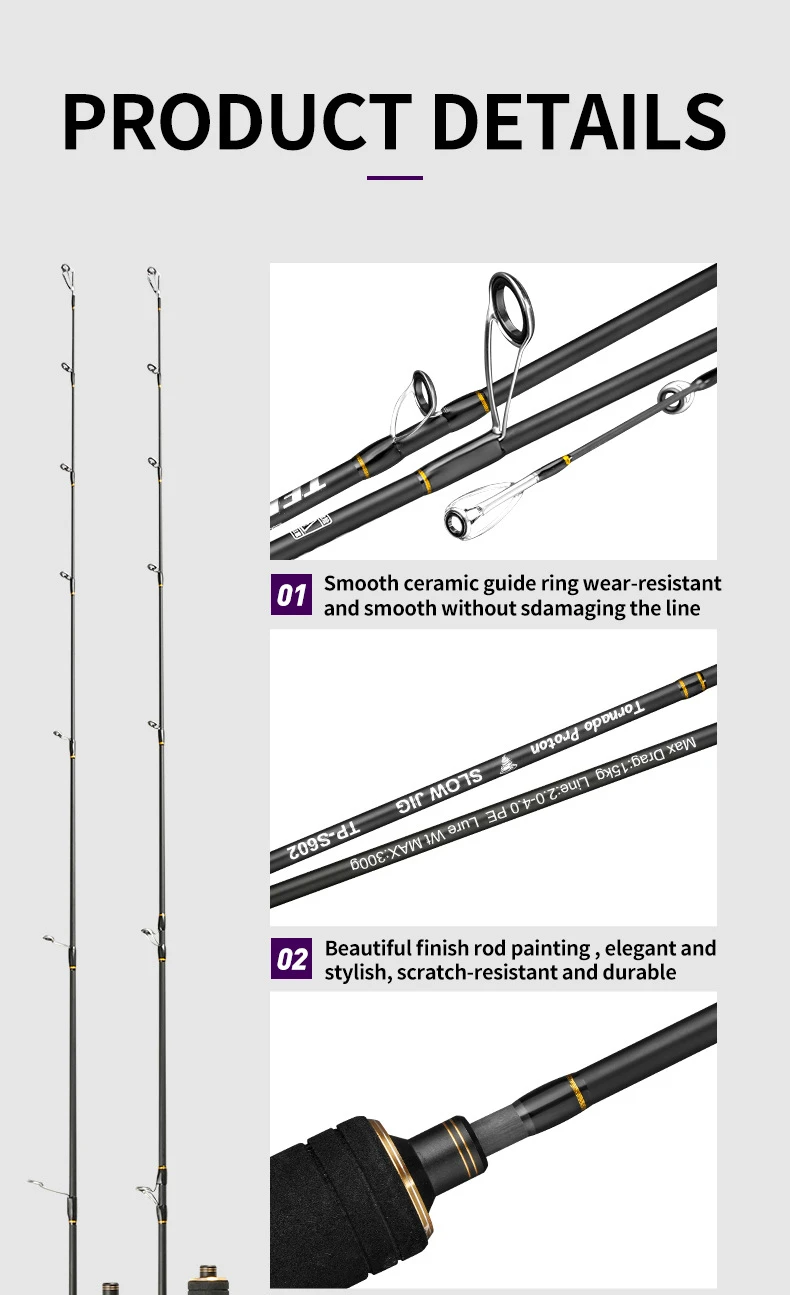
Ceramic ring guides |
|
Handle |
EVA |
|
Fishing Style |
Slow Pitch Jigging / Slow Jigging |
Blank Loading & Recovery for Slow Pitch Jig Action
The core function of a slow pitch jigging rod is not maximum stiffness. The blank needs to load under a controlled lift and recover quickly enough to transfer energy into the jig.
This series uses a responsive solid carbon tip with a stronger lower blank section to create the working cycle required for slow-pitch presentations:
Rod Lift → Blank Loads → Blank Recovers → Jig Rises → Jig Flutters or Falls
The softer upper response helps work the jig through short lifts, while the lower section adds support once the rod transitions from jig control to fighting load.
150 g vs 300 g Jig Weight Selection
The product family is divided into two clear jig classes.
150 g / 5.29 oz Models
These versions are paired with PE #0.8–2 and a 1.3 mm tip diameter.
Best suited to product programs focused on:
- Lighter slow-pitch jigs
- Moderate water depth
- Lower line resistance
- More responsive jig control
Available in both 6’0″ and 6’6″ spinning and casting configurations.
300 g / 10.58 oz Models
These versions use a 1.7 mm tip diameter and are matched with PE #2–4.
They are better suited to:
- Heavier jig presentations
- Deeper water
- Stronger current
- Heavier offshore tackle systems
This gives buyers two distinct performance levels without changing the overall visual identity of the rod series.
6’0″ vs 6’6″ Slow Pitch Jigging Rod
Length selection affects jig control and boat-side handling.
6’0″ / 1.83 m
The shorter rod offers a compact working length for vertical presentations and controlled rod movement.
Suitable for:
- Direct vertical jigging
- Compact boat setups
- Heavy jig control
- Buyers preferring a shorter offshore lever
6’6″ / 1.98 m
The longer version provides additional reach and a broader stroke while remaining within the common slow-pitch rod range.
Suitable for:
- Wider jigging movements
- Added line control around the boat
- Mixed offshore jigging programs
- Markets that prefer a slightly longer rod profile
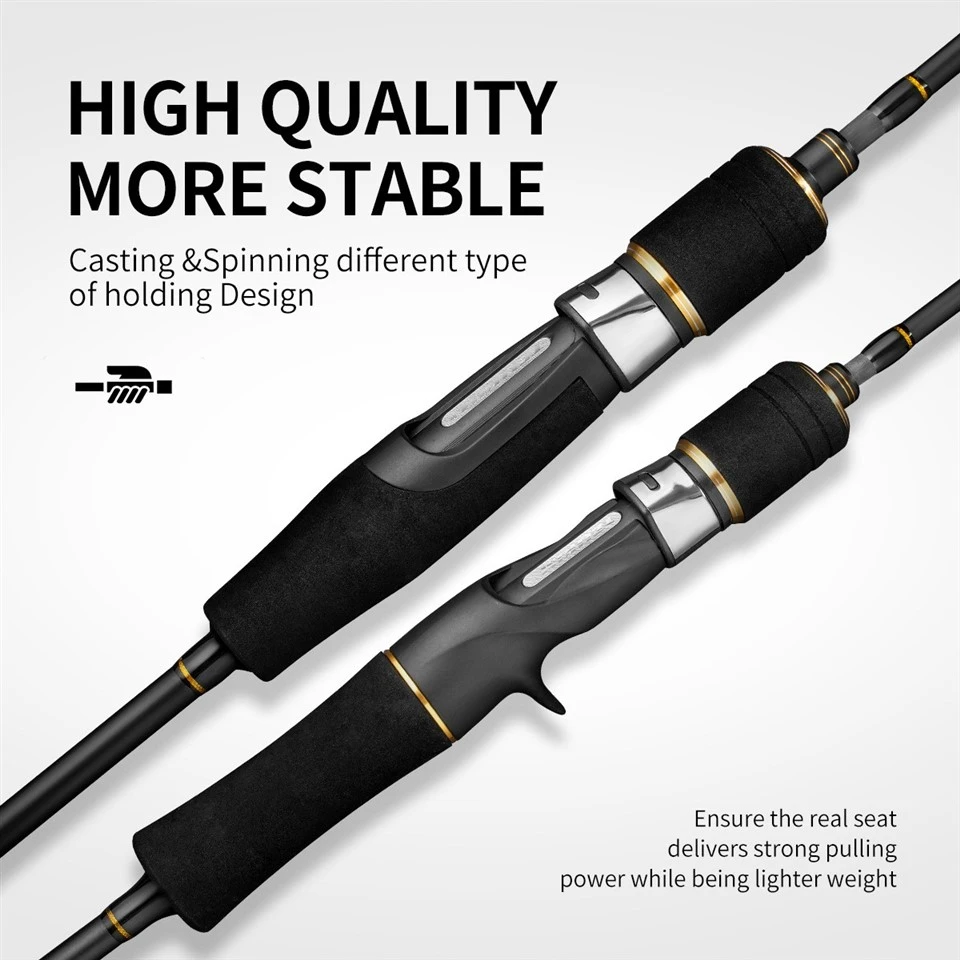
Spinning vs Casting Slow Pitch Jigging Rod
Both reel configurations are available within the same product platform.
Spinning Models
TP-S602 / TP-S662
These models use a spinning reel seat and spinning guide layout.
They are suitable for buyers targeting:
- Spinning reel users
- Easier reel operation
- Markets where offshore spinning setups are more common
- Slow-pitch programs that do not rely on conventional reels
Casting Models
TP-C602 / TP-C662
These models use a trigger-style casting reel seat and casting guide layout.
They are suitable for:
- Conventional or baitcasting reels
- Vertical jigging setups
- More direct reel positioning
- Offshore markets where casting/conventional slow-pitch equipment is preferred
For B2B buyers, offering both versions makes it easier to cover different regional reel preferences within one rod family.
Solid Carbon Tip for Jig Feedback
The solid carbon tip is designed to provide a responsive upper section for detecting jig movement and maintaining controlled loading during slow-pitch strokes.
Its advantages include:
- Responsive tip recovery
- Clearer jig feedback
- Controlled flex under short lifts
- More sensitivity during the falling phase
The heavier PE #2–4 models use a larger tip diameter to support the higher 300 g jig class.
Ceramic Guides for PE Braided Line
Slow-pitch jigging typically relies on braided PE line, making guide-ring smoothness an important part of the rod specification.
This series uses ceramic guide rings designed to provide:
- Smooth PE line passage
- Reduced friction under repeated jigging cycles
- Wear resistance
- Stable line control under offshore use
The spinning versions use 8 guides, while the 6’6″ casting models use 9 guides.
1.5-Piece Detachable Handle Construction
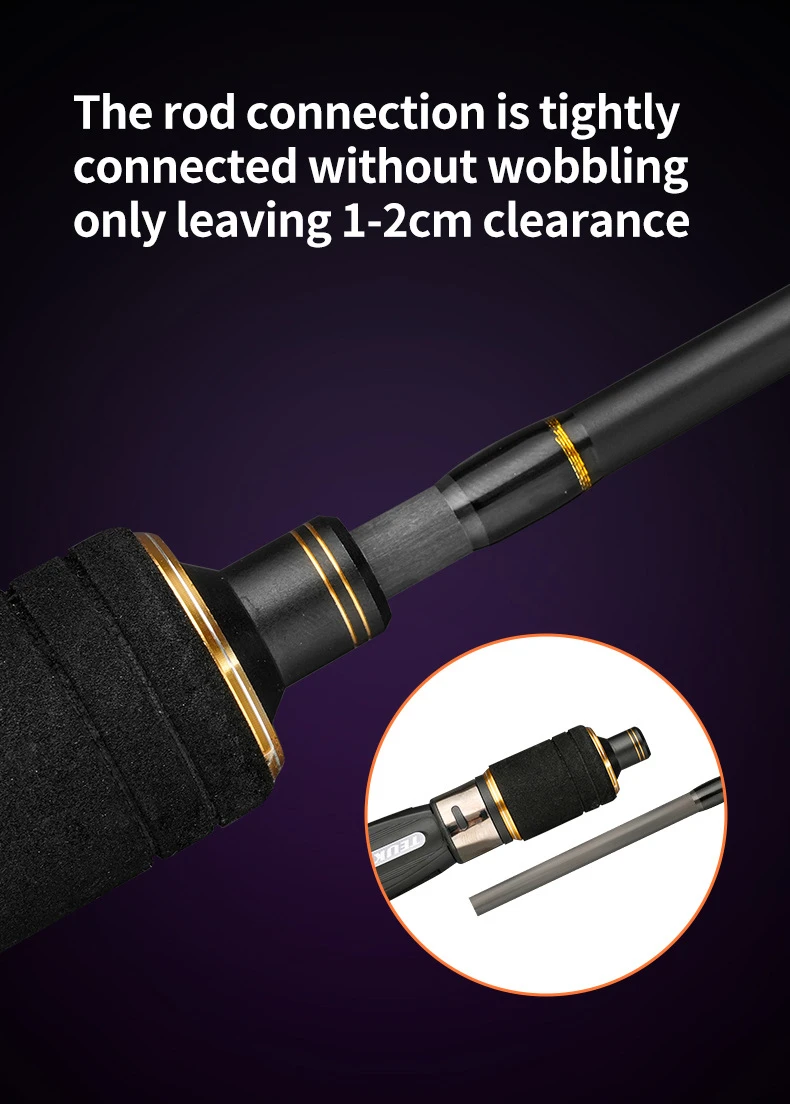
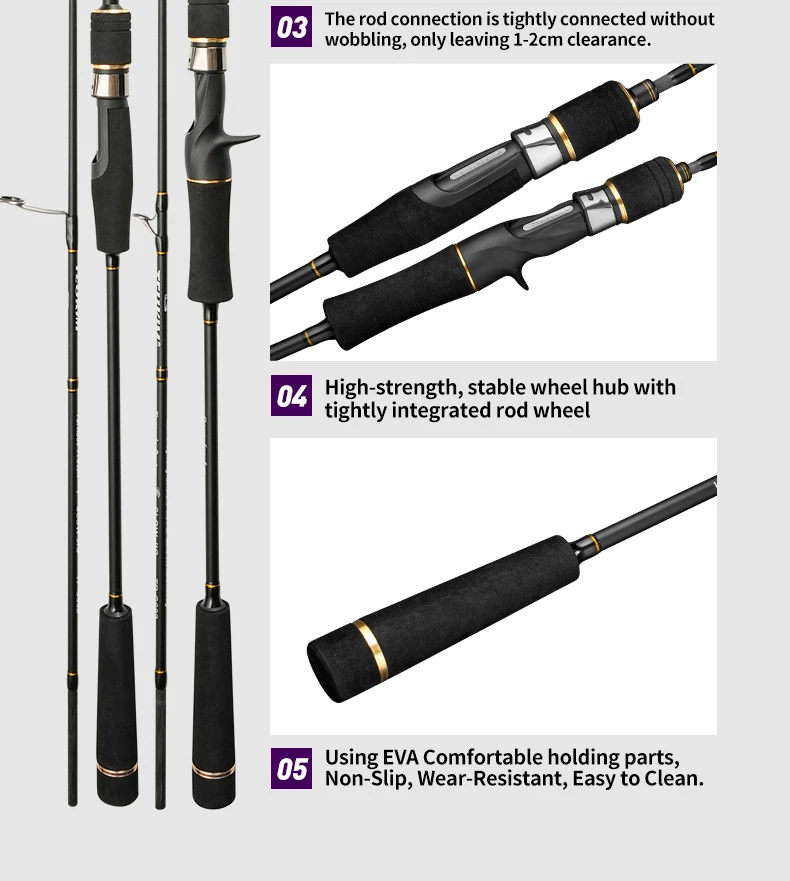
The rod uses a 1.5-piece structure, with the primary working blank connecting into the handle section.
This design helps preserve more continuous blank behavior than a conventional equal two-piece rod while reducing packed length for shipping and storage.
A small visible clearance of approximately 1–2 cm at the joint is normal when the sections are fully seated and securely connected.
For wholesale and OEM programs, this construction offers a practical balance between:
- Blank continuity
- Transport efficiency
- Storage convenience
- Offshore rod performance
EVA Handle & Offshore Grip Design
The handle uses EVA material for a secure and practical grip during repeated jigging movements.
EVA provides:
- Non-slip handling
- Wear resistance
- Comfortable grip under load
- Easy cleaning after saltwater use
The spinning and casting versions use different reel-seat layouts while maintaining a consistent rod-series appearance.
Offshore Slow Pitch Jigging Applications
This rod family is designed primarily for vertical jigging and offshore slow-pitch techniques.
Recommended Applications
- Slow pitch jigging
- Slow jig fishing
- Vertical jigging
- Offshore boat fishing
- Deep-water jigging
- Reef fishing
- Bottom-oriented jig presentations
Target Species
The appropriate model depends on jig weight, PE line class, reel size, and fishing area.
Recommended Target Species
- Snapper
- Grouper
- Amberjack
- Cobia
- Cod
- Black sea bass
- Bonito
- Tuna
- Other offshore predatory species
PE #0.8–2 models are better positioned for lighter slow-pitch programs, while PE #2–4 models provide a stronger option for heavier offshore applications.
OEM Slow Pitch Jigging Rod Customization
Fantan Fishing supports OEM and private-label development for fishing brands, importers, and wholesalers.
Available customization includes:
- Rod length
- Jig-weight rating
- PE line rating
- Blank material and carbon grade
- Tip construction
- Spinning or casting configuration
- Guide type and guide brand
- Guide layout
- Reel seat
- EVA handle dimensions
- Blank color and finish
- Logo and decals
- Model numbering
- Retail packaging
The existing 6’0″ and 6’6″ platform can also serve as the starting point for a customized slow-pitch rod series.
Why Choose Fantan Fishing
Fantan Fishing manufactures and supplies fishing rods, reels, lures, lines, and accessories for OEM/ODM and wholesale programs.
For this slow pitch jigging rod series, key B2B advantages include:
- Spinning and casting versions within one platform
- 150 g and 300 g jig classes
- PE #0.8–4 product coverage
- Solid carbon tip
- Ceramic guide system
- OEM blank, guide, handle, and cosmetic customization
This allows buyers to build multiple slow-jigging SKUs from one coordinated rod family instead of developing each configuration separately.
FAQ
1. What is the difference between a slow pitch jigging rod and a standard jigging rod?
A slow pitch rod is designed to load and recover during controlled short lifts so the blank helps create the jig’s rise, flutter, and falling action. A standard jigging rod may focus more heavily on lifting power and faster vertical movements.
2. What jig weights are available in this series?
The series includes 150 g / 5.29 oz and 300 g / 10.58 oz maximum jig classes.
3. Does this series include both spinning and casting rods?
Yes. TP-S models are spinning versions, while TP-C models use a casting configuration.
4. What PE line ratings are available?
The series covers PE #0.8–2 and PE #2–4.
5. Can the rod specifications be customized?
Yes. Length, jig rating, PE rating, blank material, guides, reel seat, handle, cosmetics, logo, and packaging can all be customized for OEM/private-label projects.