
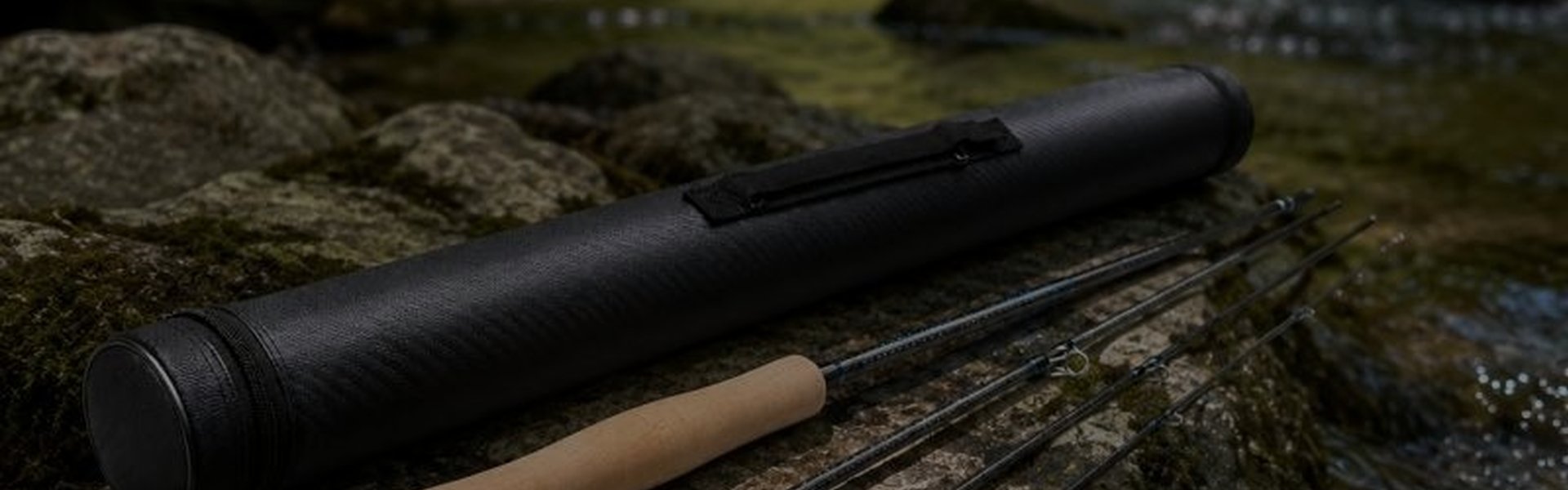
The reel seat is a small component with a large job: it has to hold the reel rigidly, fit the blank precisely, feel comfortable for hours and match the look of the rod. Seat selection is also where material descriptions are often vague, especially around carbon fiber. This guide explains the main seat types, materials and sizing considerations for spinning, casting and fly rods, and supports our Carbon Fiber Reel Seats page.
Reel seat anatomy
A reel seat has a body that sits on the blank, a fixed hood and a moving hood that clamp the reel foot, and a locking nut (sometimes two) that tightens the moving hood. The body inside diameter must suit the blank, with arbors or shims filling any gap. Seat size is usually given as a number that relates to the inside diameter, and the hood opening must accept the foot of the reels your rod is designed for.
Seat types by rod category
Spinning reel seats
Spinning seats are straight-bodied with the reel mounted below the rod. They may be down-locking (nut toward the butt) or up-locking (nut toward the tip); up-locking is more common on modern rods because it keeps the nut away from the casting hand. Many spinning seats use an exposed-blank or cut-out design so the finger touches the blank directly. Sizes scale with rod power, from small seats on ultralight rods to large-bodied seats on surf and boat spinning rods.
Casting reel seats
Casting seats add a trigger below the body so the hand can anchor the rod with the reel on top. Low-profile bodies and contoured trigger shapes suit palming low-profile baitcasting reels, while round-reel and conventional seats use taller bodies and larger hoods. Trigger position relative to the reel foot influences comfort, so it should be reviewed with the intended reel at the sample stage.
Fly reel seats
Fly seats sit behind the grip and are usually up-locking, with the reel hanging below the rod. Aluminum seats with wood, carbon or composite inserts are typical on freshwater rods; saltwater fly rods use heavier all-metal seats, often with a fighting butt. Fly seats are judged as much on appearance as on function, so insert material and finish are specification items in their own right.
Materials, and why carbon fiber needs careful wording
- Graphite-filled nylon seats are molded, light and economical, and are the standard on most mass-market rods.
- Aluminum seats are machined or formed, offer precise threads and premium finishes, and are used on fly, boat and premium spinning and casting rods.
- Carbon fiber is used in several distinct constructions that should never be lumped together under one name.
The carbon constructions you will encounter are:
- Solid carbon fiber seats or bodies formed from carbon fiber material throughout.
- Braided 1K carbon seats, where a woven carbon skin gives the visible pattern over a structural body.
- Carbon-fiber-reinforced nylon, a molded polymer with chopped carbon fiber added for stiffness; it is not the same as a solid carbon seat.
- Grip and reel-seat assemblies, where a carbon or carbon-look seat is pre-assembled with grips as a single unit.
Ask your supplier which of these a given model is, and make sure your product copy describes it accurately. This is why we label our reel seat range by construction.
Seat types at a glance
| Rod type | Common seat type | Key sizing points |
| Spinning | Straight body, up- or down-locking, often exposed blank | Blank diameter at seat position; reel foot size |
| Casting | Trigger seat, low-profile or standard | Trigger position; hood fit for low-profile or round reels |
| Fly | Up-locking with insert; fighting butt on heavier rods | Reel foot length; insert and finish |
| Boat and surf | Heavy-duty molded or aluminum, sometimes double-nut | Large reel feet; strength of hoods and threads |
Fit and sizing
Three dimensions have to agree: the blank outside diameter where the seat sits, the seat inside diameter (with arbors to bridge the gap) and the grip inside diameters on either side. Check that the hood opening accepts the reel feet of the models your customers actually use, since foot dimensions vary between brands. On exposed-blank seats, confirm that the blank finish at the cut-out is acceptable, because it becomes visible.
Specifying a reel seat for OEM
- Seat type and locking direction.
- Size and material, stated by construction.
- Color and finish of body, hoods and nut.
- Intended reel models for hood and trigger fit.
- Whether the seat is from our range, a generic sourced part or a customer-specified branded component.
How this applies to your OEM project
Choosing the right seat is a matter of fit, feel and honest material description. Our Carbon Fiber Reel Seats page presents the models we offer, labeled by construction, and the Component Sourcing & Integration page explains how branded seats from other manufacturers are sourced to your specification. To request seat samples or a quotation, request a quote.