
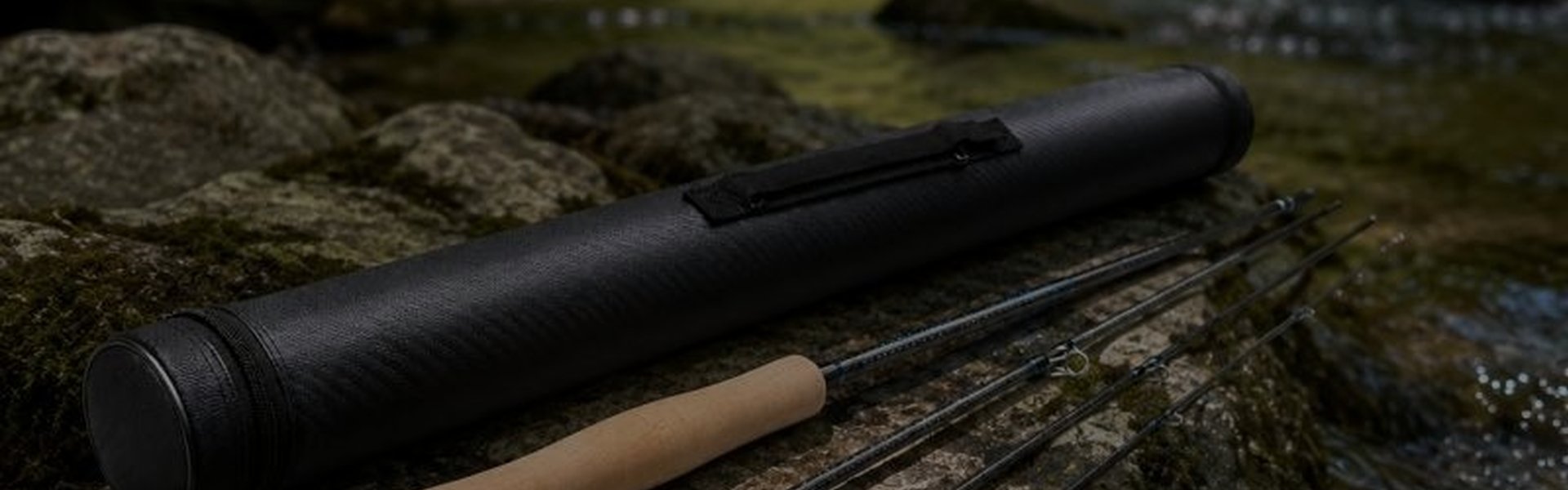
Packaging is the first thing a retailer sees and the last thing a factory finishes, which is why it is so often rushed. For a private label rod, packaging also does much of the branding work: the rod itself may be a shared platform, but the sleeve, tag and box are entirely yours. This guide covers the packaging layers used for fishing rods, what information belongs on them, and how choices affect cost and minimums. It supports our Branding & Packaging service page.
The packaging layers of a fishing rod
| Layer | Purpose | Common options |
| Protective bag | Keeps sections together and prevents scuffing | Cloth, non-woven or mesh sleeves, with or without partitions; printed or plain |
| Rod tube | Crush protection for travel and premium rods | Cardboard, PVC or aluminum; printed labels or screen print |
| Hang tag | Carries brand story and specifications at point of sale | Card tag on a loop, swing tag, folded booklet |
| Label or sticker | Model identification and barcode | Applied to bag, tube or blank wrapper |
| Retail box | Shelf presence for boxed products | Printed corrugated or folding carton with insert |
| Inner and master carton | Transit protection and warehouse handling | Corrugated cartons sized to rod count and transport length |
Branding on the rod itself
Packaging works alongside the branding elements built into the rod: logo and spec text on the blank, rod color, metallic details on winding checks or trim rings, thread wrap colors and the blank finish. Decide these together so the rod and its packaging share a consistent palette and typography. Changes to on-rod branding are made at the sample stage; changes to packaging can usually be made later, but not after printing has started.
What belongs on labels and hang tags
- Brand name and model name or number.
- Length, number of sections and transport length.
- Power and action, or test curve and casting weight for European carp and feeder markets.
- Recommended line and lure ratings in the units your market expects.
- Barcode (EAN or UPC) supplied by you.
- Country of origin and importer details where your market requires them.
- Care and warranty information, if your brand provides it.
Labeling requirements differ between the USA, the UK, EU member states and Australia. Confirm the current rules for your destination with your importer or compliance adviser rather than relying on the factory to know them.
Bag, box or tube: choosing the format
- Sleeve plus hang tag is the most common format for one- and two-piece spinning and casting rods. It is economical and keeps shelf space efficient.
- Retail box suits premium ranges and multi-piece rods sold in self-service stores, where the box carries the product story.
- Rod tube is expected for travel rods and many fly rods, and adds protection for long-distance e-commerce shipping.
- Combination formats, such as a tube inside a printed box, are used for flagship series where unboxing matters.
Protecting rods in transit
Breakage in transit is the most expensive packaging failure. Agree with the factory on tip protection, individual bagging, the number of rods per inner carton and the orientation of sections. Carton dimensions should match the transport length with margin, and carton markings should include model, quantity, carton number and handling marks. For multi-piece rods, a bag with partitions prevents sections from rubbing against each other.
Artwork, approval and minimums
Artwork and approval workflow
- Supply vector artwork for logos and text, with color references.
- Request die-lines for boxes, tags and labels from the factory or its printer.
- Approve digital proofs for layout and spelling.
- Approve a physical pre-production packaging sample alongside the rod sample.
- Confirm the packaging specification in writing before bulk printing.
Packaging cost and minimums
Printed packaging carries its own minimums, which may differ from the rod MOQ. A common approach for smaller ranges is a shared printed sleeve or box with model-specific stickers, so one print run serves several models. Standard carton sizes and stock tubes also reduce cost. Fully bespoke boxes and tubes make sense once volumes justify them.
How this applies to your OEM project
Treat packaging as part of the specification from day one, not as an afterthought. Our Branding & Packaging page lists the logo, color, wrap, finish, label, hang tag, box, bag and carton options available in an OEM program, and the Private Label Fishing Rods page explains how catalog-based programs are branded. To discuss a packaged range, request a quote.