
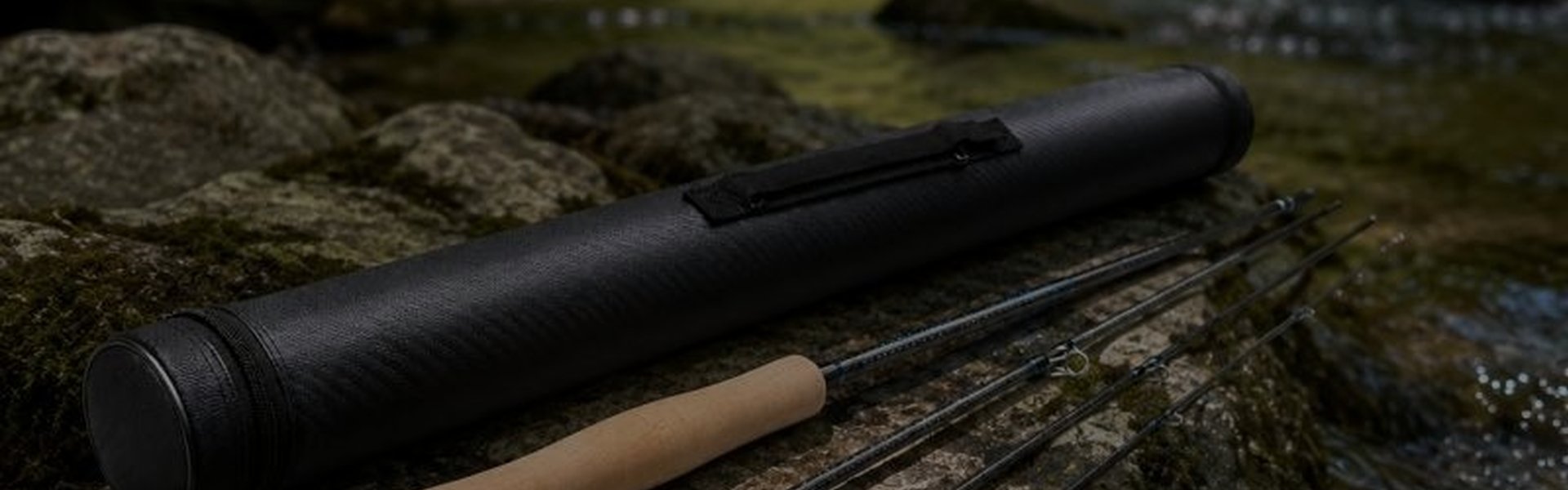
Carbon fiber and fiberglass are the two fiber families used in almost every fishing rod blank, alone or in combination. Neither is universally better; each suits certain applications, price points and angler expectations. This guide compares them in general terms to help brands and distributors specify the right material for a range, and supports our Fishing Rod Blanks page.
The materials in plain terms
- Carbon fiber (often called graphite in North America) is a stiff, light fiber available in a range of modulus grades. Higher modulus means higher stiffness per unit of material.
- Fiberglass is a glass fiber with lower stiffness than carbon but, in general, greater tolerance of impact and rough handling. E-glass is the common grade; S-glass is stiffer and lighter but costs more.
- Composite blanks combine both, either as mixed layers along the whole blank or as a glass tip on a carbon butt, to blend the characteristics of each.
General characteristics of each material
Carbon fiber blanks
Carbon allows thinner walls and lighter blanks for a given stiffness, which is why it dominates spinning, casting, carp, feeder and fly rods. Anglers generally describe carbon rods as crisper and more responsive, with faster recovery after the cast. Higher-modulus carbon can push these qualities further, but it is widely understood that stiffer fibers may be less forgiving of impact damage, and material cost rises with modulus. Many well-regarded rods use intermediate-modulus carbon precisely because it balances these factors.
Fiberglass blanks
Fiberglass bends more deeply and recovers more slowly, producing the moderate to slow actions that suit crankbait fishing, trolling, live-bait and many boat applications. Glass is generally regarded as more tolerant of knocks and rough handling, which is valued in rental fleets, youth rods and heavy-duty saltwater rods. The cost is weight: a glass blank is noticeably heavier than a carbon blank of similar power, and that becomes tiring in rods that are cast all day.
Composite blanks
Composite construction lets a designer put each material where it helps most. A carbon butt section gives lifting power and keeps weight down, while a glass or glass-rich tip gives a softer, more forgiving top for treble-hooked lures or bait presentation. Composite blanks are common in crankbait, slow-pitch jigging, boat and surf rods, and in entry-level ranges where durability matters more than minimum weight.
Side-by-side comparison
| Consideration | Carbon | Fiberglass | Composite |
| Weight for a given power | Lowest | Highest | Between the two |
| Typical action range | Fast to extra-fast, also moderate | Moderate to slow | Moderate to moderate-fast |
| Feel | Generally crisp and responsive | Generally soft and forgiving | Blended |
| Durability under abuse | Generally lower, varies with modulus | Generally higher | Depends on layup |
| Material cost | Higher, rising with modulus | Lower | Intermediate |
These are general tendencies. Actual performance depends on layup, wall thickness, resin and taper as much as on the fiber itself, and any specific claims should be based on samples and testing.
Matching material to application
- Bass spinning and casting rods: carbon, with glass or composite options for crankbait models.
- Carp, feeder and match rods: carbon, with glass sometimes used in quiver tips.
- Fly rods: carbon for most ranges; glass for a niche of slow-action rods.
- Surf and beachcasting rods: carbon or composite depending on casting style and price point.
- Boat, offshore and overhead rods: composite or glass for durability and lifting power.
- Youth, rental and entry-level rods: glass or composite.
Cost and sourcing implications
Material choice flows directly into unit cost and MOQ planning. Carbon modulus grades differ in price, and composite layups require more pattern work than a single-material blank. Because blank runs are produced per model, with a minimum of 100 pieces per model, it pays to decide materials across the whole range at once so that similar models can share materials and set-ups.
How this applies to your OEM project
Start from the angler and the technique, then choose the material that serves them at your target price. Our Fishing Rod Blanks page explains how carbon, fiberglass and composite blanks are supplied in bulk to brands, distributors and qualified rod builders. For a closer look at how layup and taper shape a blank, read Fishing Rod Blank Construction, and when your material decision is made, request a quote.